Most purifiers run on low power continuously
A typical bedroom air purifier draws 30 to 80 watts depending on the fan speed. On auto or low settings, many units run near 40 watts continuously. At 40 watts for 24 hours, that is about 0.96 kWh per day, or roughly 29 kWh per month.
High CADR (Clean Air Delivery Rate) units for large rooms can draw 100 watts or more on their highest settings. Auto modes ramp up only when particle sensors detect pollution, so average power is usually lower than the maximum rating.
Cost is modest compared to HVAC
At an illustrative 18 cents per kWh, a 50-watt purifier running 24/7 costs about 22 cents per day or $6.50 per month. This is a fraction of what an air conditioner or dehumidifier uses, making continuous operation practical for allergy or asthma management.
- Use the lowest effective fan speed for the room size.
- Keep doors and windows closed so the purifier cleans a defined volume.
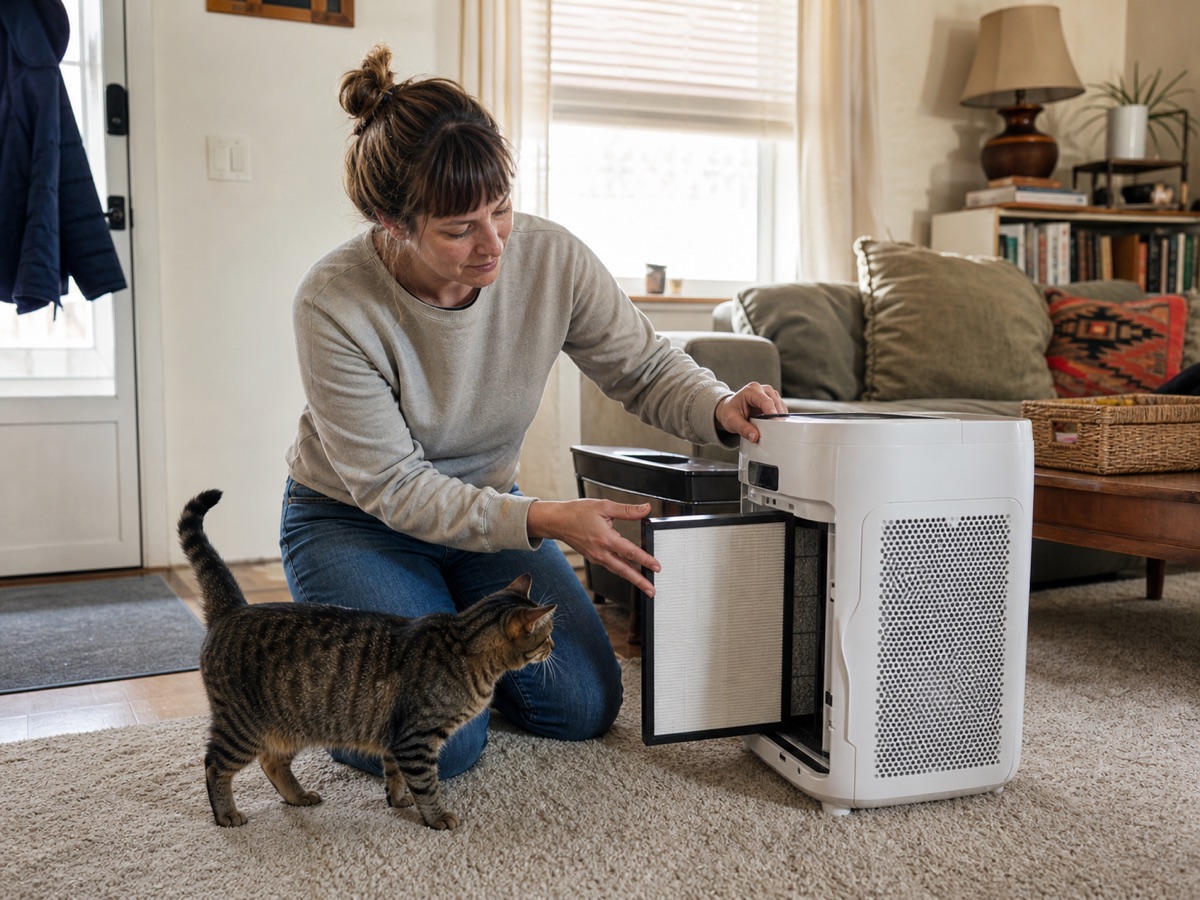
- Replace filters on schedule; clogged filters make the motor work harder.
Combine with source control for best results
An air purifier addresses airborne particles but does not remove the source of pollutants. Reducing indoor sources — vacuuming with HEPA, controlling humidity to limit mold, avoiding smoking or burning candles indoors — reduces the load on the purifier and can let you run it at lower speeds.
Rate source and limits
The default rate is the EIA U.S. residential average for April 2026, retrieved July 16, 2026. It is an average revenue per kilowatt-hour, not a quote for your utility plan. Fixed fees, taxes, tiers, and time-of-use prices can change the bill.
Open the EIA source