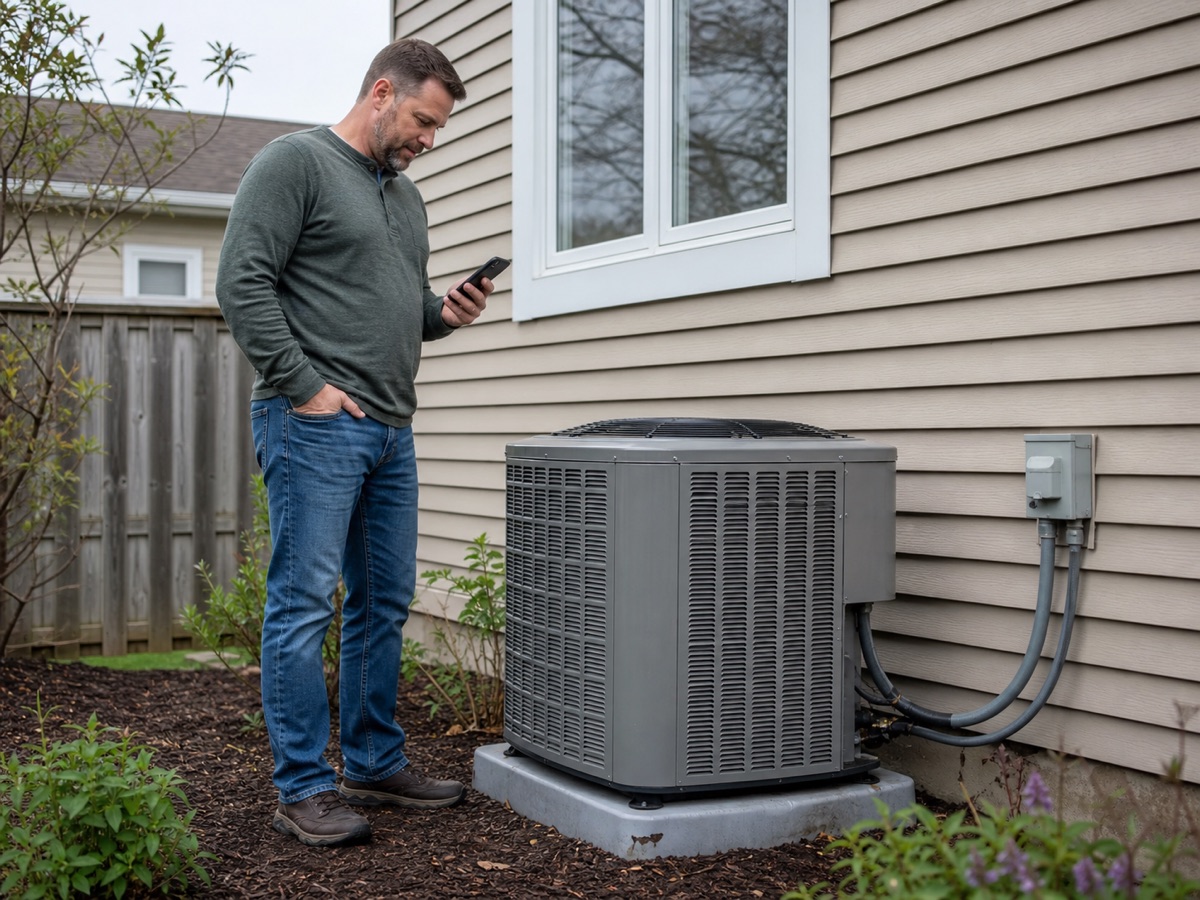
Two ratings matter: SEER for cooling, HSPF for heating
SEER (Seasonal Energy Efficiency Ratio) rates cooling efficiency. HSPF (Heating Seasonal Performance Factor) rates heating efficiency. A modern heat pump might be 18 SEER / 10 HSPF. Higher numbers mean more heating or cooling per kWh of electricity.
In heating mode, a heat pump moves heat from outside air into the home. Its coefficient of performance (COP) varies with outdoor temperature — typically 3.0 to 4.0 at 47°F, dropping to 1.5 to 2.5 near freezing. Below the balance point, backup resistance heat kicks in, cutting efficiency roughly in half.
Winter cost is the larger share
In cold climates, a heat pump's heating season energy can be 2 to 3 times its cooling season energy. A 3-ton 10 HSPF heat pump in a 4,000 heating-degree-day climate might use 8,000 to 12,000 kWh annually for heating alone, versus 1,500 to 2,500 kWh for cooling.
- Set the thermostat as low as comfortable; each degree saves 2 to 3 percent.
- Keep the outdoor coil clear of snow, ice, and debris.
- Schedule professional maintenance annually to check refrigerant charge.
Monthly winter estimate
At an illustrative 18 cents per kWh, a 3-ton 10 HSPF heat pump using 1,200 kWh in a cold January costs about $216 for heating that month. A comparable resistance heater would use roughly 3,000 kWh, or $540 — the heat pump saves about 60 percent.
Dual-fuel systems can optimize further
In very cold climates, a dual-fuel (hybrid) system pairs a heat pump with a gas furnace. The heat pump handles mild days efficiently; the furnace takes over below the economic balance point. If gas is available, this can lower total heating cost compared to an all-electric heat pump with resistance backup.
Rate source and limits
The default rate is the EIA U.S. residential average for April 2026, retrieved July 16, 2026. It is an average revenue per kilowatt-hour, not a quote for your utility plan. Fixed fees, taxes, tiers, and time-of-use prices can change the bill.
Open the EIA source