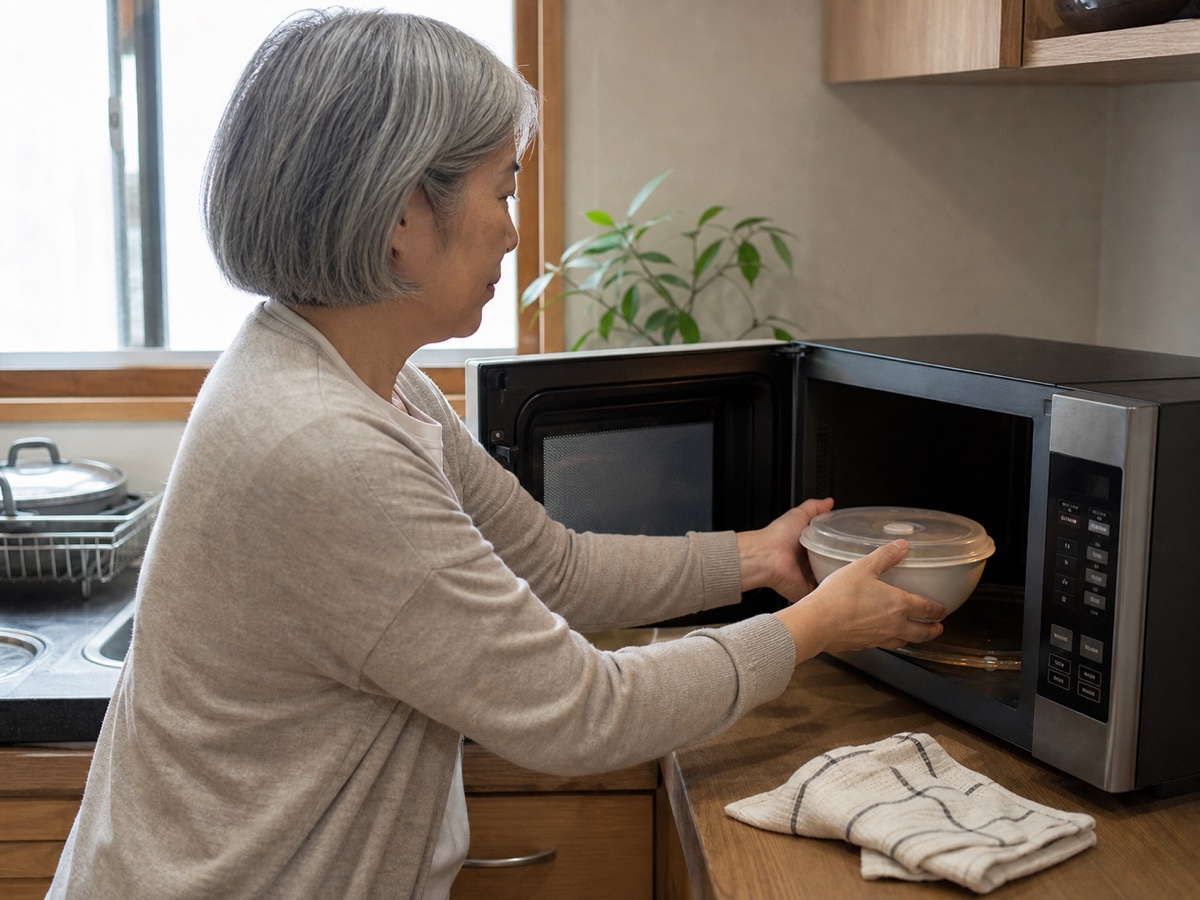
Short cooking time means low cost
A 1,200-watt microwave running for 2 minutes uses only 0.04 kWh. Even at a high rate of 18 cents per kWh, that single use costs less than a penny. The microwave is one of the most energy-efficient cooking appliances because it heats food directly instead of heating the air around it.
Power levels below 100 percent cycle the magnetron on and off, reducing average wattage. A half-power setting for 4 minutes uses roughly the same total energy as full power for 2 minutes.
Compare microwaves to ovens and stoves
A microwave uses significantly less energy than preheating a full-size electric oven for a small dish. For reheating leftovers or cooking single portions, the microwave can cut cooking energy by 50 to 70 percent compared to a conventional oven.
- Use the microwave for small batches and reheating to save energy.
- Match the container size to the portion to avoid over-cooking.
- Keep the interior clean so the microwave energy transfers efficiently.
Standby and display power
Like most kitchen appliances, a microwave draws a small standby current to keep the clock display and control panel active. This is typically 2 to 5 watts. Over a full year, that standby load adds about 17 to 44 kWh, or $3 to $8 at typical U.S. rates.
Rate source and limits
The default rate is the EIA U.S. residential average for April 2026, retrieved July 16, 2026. It is an average revenue per kilowatt-hour, not a quote for your utility plan. Fixed fees, taxes, tiers, and time-of-use prices can change the bill.
Open the EIA source